Wednesday, June 24, 2015

Take Down The Flag - Why Symbols Matter

No comments:

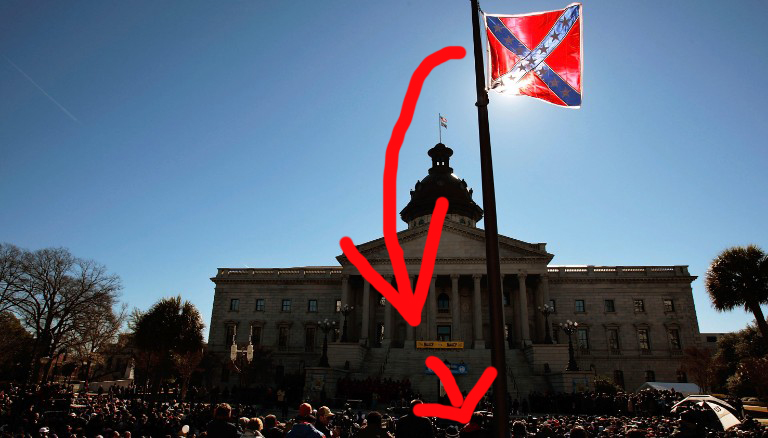
In the wake of the senseless killing of Reverend Clementa Pinckney and eight others in a historic African American Church, new calls were made for the removal of South Carolina’s Confederate flag.

Removing the Confederate flag from South Carolina’s State Capitol has been a long standing debate but the controversy was reignited by the fact that while the U.S. Federal flag was lowered in response to the recent tragedy, the Confederate battle flag remains high, literally padlocked into place.

For some, the Confederate flag represents an important part of Southern pride and for others it’s a painful reminder of the past bigotry and slavery of the South, as well as some remaining white supremacy and racial intolerance. Personally I agree with South Carolina Governor Nikki Haley’s call to remove the Confederate flag, and with President Obama’s statement that it belongs in a museum. I hope it will be soon laid to rest. 


But you could ask -- why is EVERYONE talking about this?

CNN, The New York Times, Fox News and my favorite, John Oliver, are just a few of those weighing in. So, does it really matter? Why all the fuss over a flag - after all, it’s just a bunch of stars woven into a piece of fabric, right?

Wrong. It actually does make a difference. Whatever your take on the Confederate flag, one thing is clear: symbols matter.

Symbols, in the political arena or anywhere else are powerful ways to evoke feelings and passions. One small image, like a swastika can arouse such animosity, and a Star of David such pride. Symbols - the inanimate objects and images we surround ourselves with - have the power to shape us. This is probably why the Jewish faith is replete with images and symbols, all of which are intended to educate and inspire.


Take for example the Mezuzah; the rolled up parchment encased in a beautiful cover containing the first paragraph of the Shema which Jews affix to their doorposts. It is not just a pretty ornament intended to let people know “Jews live here.” Some suggest that the Torah commands us to post the Mezuzah as a way of reminding us of our belief in God and of our very purpose and mission in this world. You may ask: if you believe in God and in Judaism’s teachings, then you believe - why the need for a reminder? Because a symbol allows, or even on some psychological level compels us, to reflect on our beliefs in a way nothing else can. A home in Jewish tradition is not merely a place to live, in the purely physical sense. It is the place or the context within which we carry out our very purpose in this world. It’s where we build our most intimate relationships, where we raise our families, where we pray and observe the Sabbath. The very sight of the Mezuzah triggers the thoughts and feelings that are vital in using our homes to carry out our Divine mission in life.

And so the Menorah, Shabbat candles and Jewish books we have in our homes are not merely relics of an ancient tradition used for perfunctory rituals - they actually have a direct effect on the way we go about our lives today and the people we become.

A symbol - be it a flag, a logo or a piece of Judaica - holds energy that impacts us day in and day out on both a conscious and subconscious level. Indeed images have surfaced of the man who took the life of Reverend Pinckney and the eight other victims, proudly holding the Confederate flag.


Symbols matter. Let’s make sure we surround ourselves with the right ones.

And yet I would be remiss to not mention the dangers of placing too large an emphasis on the role of any one component in a tragic event. The swastika did not perpetrate the Holocaust - the Nazis did. A flag did not senselessly shoot the innocent church goers - a person did. Though symbols inherently hold power, it is what we DO with them that really matters. It is how we use them and what we let them become.

So, let us not allow this flag to become a distraction from the matter at hand. Let it instead serve as a reminder of the discussions we MUST be having - about racial intolerance, gun control, and mental illness. No crime is committed in a vacuum. Let US use symbols - not the other way around.


A CALL TO ACTION... #ShabbatOfSolidarity
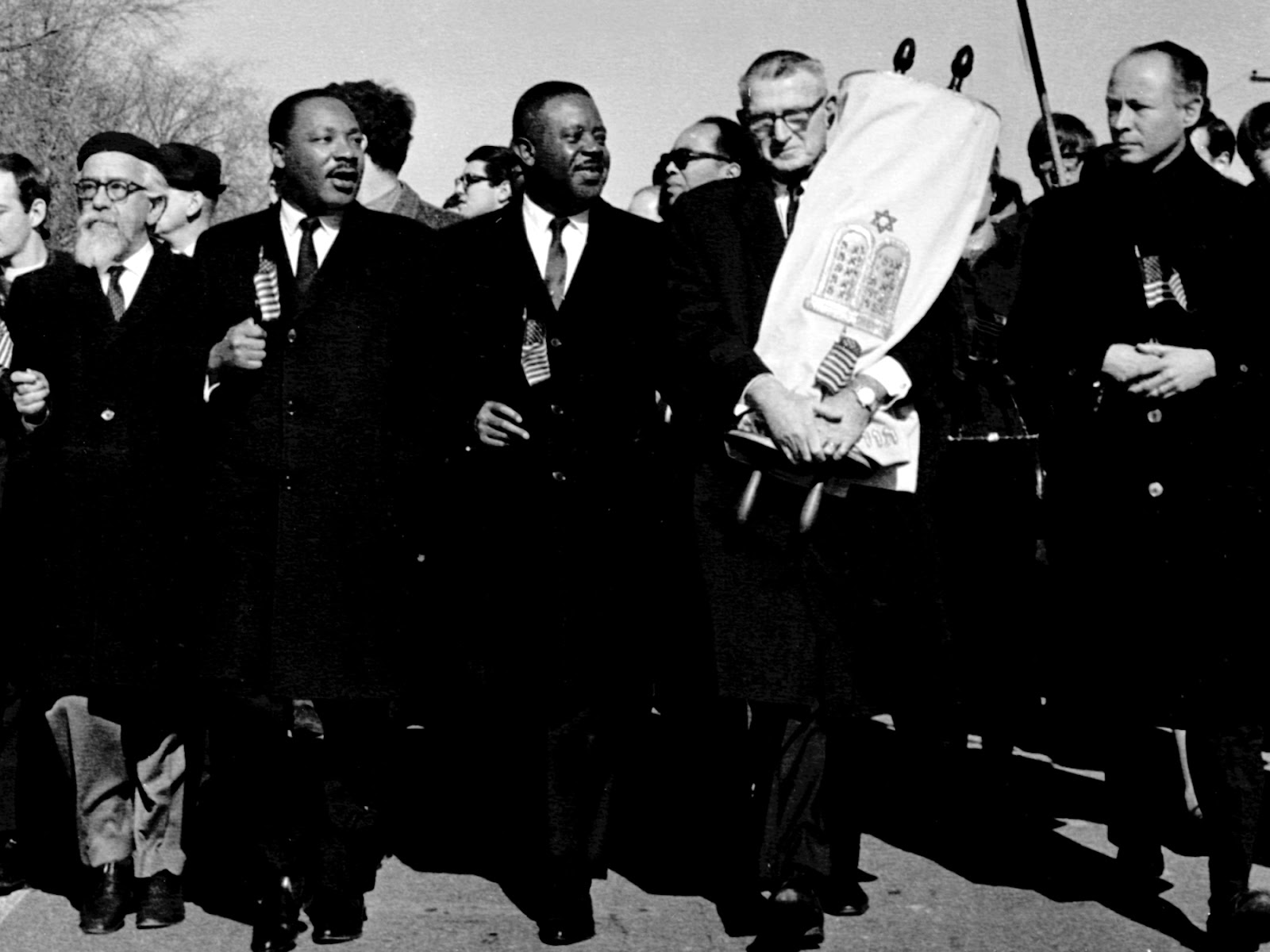
Speaking of symbols, take a look at this iconic image. This photo is one of many reminders that the Jewish community marched with Martin Luther King Jr., and that we will always stand with those who fight for equality and against intolerance.

This Shabbat, 13 Jewish organizations are calling for a “Shabbat of Solidarity” with the Black community as a protest against racism and discrimination. MJE will be joining the list of communities participating.

This Shabbat, I call on my students, readers and entire community to not just participate superficially, but to truly pray in solidarity. Pray for the healing of the families, friends, and communities of the victims. Pray for the voices calling out against intolerance to be heard. Pray for an end to senseless killing. 


But most importantly - let's lower “the flag” within ourselves. Let us look deep inside and recognize where we have padlocked "flags of intolerance” - intolerance for other communities, for our co-workers, our neighbors, and even our own families. Take down those flags and let us lay them to rest.

Tuesday, June 9, 2015

Why Richard From Silicon Valley is a Total Mensch (Spoiler Alert!)

No comments:

richard hendricks silicon valley hack mensch life“Richard; do the right thing here -- [Dramatic Pause] -- lie on the stand,” says Erlich Bachman, part owner of tech startup Pied Piper, in this Sunday’s episode of the hit HBO comedy series Silicon Valley. This is Erlich’s under the circumstances “reasonable” advice to Richard just moments before he is called to the stand.

Quick context for those who don’t watch: the evil tech giant Hooli has brought an absurd intellectual property lawsuit against protagonist Richard and his brilliant but floundering startup Pied Piper, in a low blow effort to tie them up in legal fees so they can beat Pied Piper’s much better app. Hooli really has no case, until the prosecution realizes that Richard did in fact make one tiny mistake, having used a Hooli company computer during his time there to perform some small and insignificant test for his app.
Hooli has no real proof. All Richard has to do is tell a little white lie on the stand. Most viewers watching Richard take the stand are probably praying he’ll take Erlich’s advice and just lie. We nervously watch and laugh as he awkwardly struggles through the prosecution’s line of questioning, and just when you think he might actually do the “right” thing in Silicon Valley speak - he does the Mensch thing instead. He admits to his one small mistake and gives the prosecution a real case.
“I just wanted to be different...but if this company is built on lies, then we’re really not that much different from Hooli. The law says that I lose everything - my whole company, everything that I worked for, because I used one Hooli computer to test and modify one block. Is that right? I mean, is that fair? To me, if the system says that’s fair, then I guess I’m probably not meant to be a part of it..."

This is the genuine and vulnerable speech Richard makes in one of the few sincere moments the show has ever had.
In the world of Silicon Valley - both in the show and real life - lying, cheating and doing whatever it takes to get ahead are not just a way of life - they are seemingly admirable moves.  “Business is business” is a phrase we proudly use to justify otherwise unethical behavior. Sacrificing morality for monetary or personal gain has almost become an accepted aspect of the American dream. Why? Perhaps because it demonstrates our great ambition and our willingness to do anything to get ahead and even if deep down we know it’s wrong, since it’s become so accepted, it doesn’t seem quite as bad. Our protagonist Richard sticks out like a sore thumb in his world because he refuses to adopt this attitude. Time and again he does what he knows is right, even if it means sacrificing success and losing a short term battle for himself or his company.


But what about the bigger picture? What about on the soul level? 

Just because we have become numb to our world’s “business is business” attitude doesn’t mean something else isn’t happening internally or to the development of our personality. Judaism teaches that every action we take, positive or negative, has a real and significant impact upon us. Whereas the French philosopher Rene Descartes believed: ”I think, therefore I am”. Judaism teaches “I act, therefore I am”. Ultimately we are the bi-products of our actions and behavior, whether we feel it or not. This is why classical Judaism is mitzvah-oriented - 613 do’s and dont’s - because although thoughts and beliefs are important, it’s ultimately what we do that develops us into who we become. This is why the bulk of Judaism’s mitzvot pertain, not simply to religious ritual, but to our everyday lives since that’s what forms us as people. The Torah therefore prescribes a certain diet (Kashrut), what is considered appropriate or inappropriate speech (lashon hara), laws pertaining to commercial dealings, modest dress (tzniut) and special sensitivity to the widow, stranger and orphan because the impact of the way we speak, eat, dress on our souls and on our personality is huge. The good news is that the good we do, whether known publicly or not, plays a tremendous role in our personal development. Back to our mensch of the hour - he may repeatedly make what society considers bad business moves -- but he is doing right by his soul and the universe at large.
Silicon Valley writers have, of course, left this episode with a major cliffhanger: what will the judge decide? Will Richard’s menschy compulsions pay off or will they be forever stuck at the bottom of the valley? It is a comedy after all, so things will probably work themselves out -- but in real life doing the right thing, even at the expense of personal gain, can make or break the kind of people we ultimately become. 

One more difference: our lives are not a predictable 10 episode season scripted by other people. In real life, we write our own scripts and all we really know is that every action we take directly impacts the long-term narrative for our soul.

Tuesday, May 26, 2015

All Night Long

No comments:
This past Saturday night, on the eve of the Jewish holiday of Shavuot, over 300 young Jewish men and women flocked to MJE to participate in an age-old custom of staying up all night to study Torah. The learning part of the program began at 10:30 pm and continued until 4:45 am at which point our whole group ascended to the rooftop of MJE’s headquarters on West 86th Street to pray at sunrise. Other than MJE’s trips to Israel each year, this event is my favorite and I think I finally figured out why.

The custom to stay up all night , known as Tikkun Leil Shavuot has its source in the Midrash, an important part of rabbinic literature, which relates that the night before the Torah was given at Sinai, the Israelite's retired early to be well-rested for the momentous day ahead. They overslept and Moses had to wake them up because God was already waiting on the mountaintop. To rectify this perceived flaw, many stay up all night to learn Torah. I doubt most people make the decision to stay up all night for this reason alone. To be sure, the Starbucks coffee, delicious cheesecake and opportunity to meet that someone special were also factors at play at MJE, but the feeling of being in a room with so many people studying the Almighty’s wisdom all night long totally inspires me. How often do we block out all the noise and distractions around us and make a time to hear some wisdom from above? We live in a world inundated with human wisdom which desperately needs to be balanced by a spiritual perspective, one that takes into account not only the future but also our rich past.  Technology and science must be embraced as they bring so much light and goodness into our lives, but divorced from our religious faith, they only explain the what’s of our existence and leave us wondering about the why’s. 

Judaism doesn't pretend to have all the answers but it’s got quite a few. Staying up all night trying to figure out the why’s and ultimately how we can bring more meaning into our lives and into the world around us is a really great way to spend our time, even if it takes all night.

Thursday, April 2, 2015

As Though You Left Egypt

No comments:
One question I've always had in regard to the Seder: where is the blessing? We make a blessing before virtually every mitzvah in the Torah. Before we put on our Tefilin, before we shake the Lulav, before we blow the shofar on Rosh Hashanna, there's always a blessing, except it seems for the mitzvah we perform on the Seder night. The Torah tells us in four places: vhigadeta l'bincha bayom hahu- “and you shall relate (the story of the Exodus) to your sons on this night”, so the Seder clearly fulfills a Biblical command and yet no blessing! Where is the blessing for the Seder?

One suggestion offered is that the blessing is the Kiddush that we recite in the beginning of the Seder. Another answer offered is that the command to relate the Exodus has no limit. As we say in the Hagadah: vechol hamabeh harei ze meshubach- “whoever increases in telling over the story is praiseworthy” and generally we don’t recite blessings over things without a limit like Charity or Torah study.

The medieval commentator, the Rashba, suggests that there is in fact a blessing on the Seder, namely the blessing we recite right before we drink the second cup: Asher Ga'alnu, v'ga'l avoteinu – “God who has redeemed us and redeemed our forefathers”. However blessings are supposed to be recited before the mitzvah activity and the blessing of asher g'aalnu is said after most of the Exodus story has already been
told! And so if the Rashba is correct then why is the blessing of asher ga'alnu not said in the beginning of the Hagadah, before the mitzvah, why is it said so late in the Seder, after much of the mitzvah has already been completed?

There is one mitzvah in which the blessing is said after the mitzvah is completed, namely, conversion. The prospective convert says the blessing only after he or she immerses in the Mikvah (ritual bath) because beforehand they cannot say the classic mitzvah blessing formula:  asher kidishanu b'miztvotav v'tzivanu - "who has sanctified and commanded me” since the person isn't Jewish yet! 

So too with the mitzvah of relating the Exodus at the Seder.

The mitzvah of the Seder is not simply telling over the story of what once was but to actually feel that we ourselves were slaves and that on the Seder night we are being freed. That is why the language of the blessing is "asher ga'alnu" - that we were redeemed, not simply our ancestors. And that, suggests the Chasam Sofer (great Chasidic Rabbi), cannot be said until you have experienced, until you have begun to tell over the story, to reference the Marror and the Matzah, to feel a sense of servitude and then freedom. We need to first go through the story so we ourselves can feel as much of this as possible, as if this were all happening to us now, and then, and only then, can we recite the blessing.

But how can we really feel this? We weren't there, we didn't experience the Exodus ourselves.

The answer I believe is by recognizing that redemption is not something of the past but a repetitive theme in Jewish history. The Exodus was just the first time the Jewish people were redeemed from an oppressive situation, but it certainly wasn't the last and we should be speaking about the many other instances when this happened, certainly in modern times. 

One great example: Our generation is witness to over a million Jews leaving the former Soviet Union and coming back to Israel. Growing up I was deeply impacted by the Soviet Jewry movement in which my family was involved. I remember when I was in College, my father, an immigration attorney, secured a 6 month visa for a woman by the name of Carmella Raiz to come to the United States and plead the case on behalf of her husband, Vladamir, a long term Refusnik in the former Soviet Union. Vladamir had been denied the right to emigrate and Carmella came to America with one of her two sons to lobby Congress to help free her husband and other Refusniks.

The Raiz family lived in Vilna, Lithuania and had become staunch Zionists and eventually ba'alei teshuva (returnees to the Jewish faith). Carmella, a Cellist for the Lithuanian philharmonic, traveled 15 hours each month to the closest mikvah which was in Moscow. While in New York, my father was able to arrange a press conference at Gracie Mansion with former Mayor Ed Koch.

Picture the scene: Dozens of reporters, photographers and there was Koch sitting at a table with Carmella and her ten year old son, wearing a big black velvet yarmulke. Koch began to ask the little boy some questions: “Tell me young man, what's your name?” The young boy answered: “Moshe”. “Moshe”, responded Koch,  “that's a Hebrew name, what's your Russian name?”. The boy simply answered: “Moshe”. Koch continued: “Y'know, I also have a Hebrew name, it’s Isaac, but my English name is Edward, what's your Russian name?” “Moshe, my only name is Moshe”, said the boy. “OK Moshe, what's your favorite subject  you most enjoy studying?  “Torah”, answered the boy. “Torah, do you study Torah in school? asks Koch. “No", responds Moshe, "were not allowed to study Torah in school but my father teaches me”. “Y'know , Moses was a great Jewish leader", Koch continues, "how did you come to be called after him?” Then Carmella, Moshe's mother chimed in: "Mr. Mayor, with your permission, I'd like to answer that question on behalf of my son: "When Vladamir and I were married 13 years ago, we promised each other that if God blessed us with a son we were going to name him Moshe and he will take us out of this Egypt".

With that statement the press conference ended.

The Exodus happens in every generation. In our time, the redemption took place from Mother Russia and it was no less of a miracle then the redemption from Egypt that we celebrate on the Seder night.

And the redemption from Russia wasn't just a physical one, it was also a spiritual one. In the Hagadah we answer the child's ma- nishtana questions, not only by saying Avadim hayinu, that we were once slaves and now we are free, but we also say mitchilah ovdei avodah zarah- that originally our ancestors worshipped idols but then ultimately came to follow God and His Torah. Virtually the same thing is happening today with the next generation of Russian Jews. Whereas the first generation of Russian immigrants in the 1970's and 80's were quite wary of religious life, themselves products of communism and atheism, their children, today in their 20's, 30's are much more open to Judaism.  At virtually every MJE Shabbat Dinner, class or event there are numerous young Jewish professionals whose parents emigrated from the Soviet Union. These young people are open and hungry to learn about Judaism and they don't have the same negative associations their parents possessed.

And so as we sit down to our Seders this Passover, let us reflect on some of the modern day redemptions and miracles. Be it the Exodus from Russia or Israel's continued survival in the face of constant threats and attacks. Bring up those miracles at your Seder. Discuss those extraordinary parts of our history because by doing so you will be in a better position to fulfill the Hagadah's mandate of keilu hu yazta mimitzrayim, to feel as though we ourselves, in our generation, were also redeemed from Egypt.

Chag Sameach!

Monday, March 2, 2015

Get Over It

No comments:
After listening to Prime Minister Netanyahu’s speech to AIPAC in which he justified his decision to address Congress tomorrow, I have just one comment: Get over it. The world needs to get over the political question as to whether Netanyahu should have accepted the invitation to speak before Congress and focus on the real issue: how best to deal with Iran.

Israel and the United States have legitimate differences over how to prevent Iran from going nuclear and that is all we should be discussing. Focusing so much time on whether the Prime Minister insulted the President or whether he accepted the invitation in order to help with his reelection at home distracts from the serious and existential threat Israel today faces. With such a critical issue before us we cannot afford to allow petty politics to get in the way of America and Israel working together to stop Iran from becoming a nuclear power.


One last point: The Prime Minister in his talk today made an interesting distinction between America and Israel’s stance on this issue. Whereas America’s primary concern is its security and standing in the world, Israel’s sole concern is her very survival. That distinction helps account for the stricter tone and approach the Prime Minister is advocating in comparison to the approach of the US Administration. Clearly this issue is critical for both countries but it’s only life and death for one. Therefore, despite the politics and possible breaches of protocol, we must speak up.  As the holiday of Purim approaches and we recall the last Persian leader who threatened the Jewish people, we must follow the example of Mordecai and Esther to lend our support to those who speak in defense of our people.

Wednesday, February 4, 2015

Man on Fire

1 comment:
The image of a man set on fire is haunting. The fact that this brutal act against a fellow Muslim was performed in the name of God makes it even worse. If this is not a call to moderate and peace loving Muslims to join the battle against ISIS and radical Islam, than I don't know what is.  The silence of moderate Muslims needs to be broken and I'm hoping that Jordan's revulsion at their air pilot Moaz al-Kasasbeh’s kidnapping and murder will propel them and other Muslim nations to speak out and fight back.

We keep saying the war against terrorism is a war against radical Islam, not Islam per say. The Islamic world now has the chance to make that distinction clear. If and hopefully when peaceful Muslims speak out and act, we must be here to embrace them. Besides having more people and nations helping to combat the greatest threat today, the world needs to see a unified front of religions joining in peace and not war. Now is the chance for Jews, Christians, Muslims and all religious groups to stand side by side and show the world that religion is not synonymous with war; that religious leaders can bring peace and love into the world, not just war and hatred like so many today believe. Now is the time for religious leaders to show the world a different face of religion, one which respects the dignity of all humankind and promotes peaceful coexistence.

If this could even start to happen, then perhaps Moaz al-Kasasbeh’s tragic death would not have been in vain.

Monday, January 26, 2015

Getting Comfortable with Power

No comments:
Since the attack on the kosher supermarket in France, Jewish schools in Belgium and Holland also had to be temporarily closed. I also learned that Shuli Korash, a hairdresser in France designed a new type of skullcap called the “Majic Kippah”. Made of real or synthetic hair it is designed to fully blend in with one’s own hair type and color so no-one can tell the person is actually wearing a yarmulke. This way, Jewish men who wish to cover their heads will not be subject the anti-Semitism that is rearing its ugly head in France and elsewhere in Europe.
What is our reaction to what is happening in Europe and throughout the world?
Last week’s Torah reading, Parshat Bo records the last of the three plagues that God brings down on Egypt: swarms of locusts, darkness and slaying of the first born. The main point the Jewish Sages classically derive from the Exodus story and specifically from the plagues is the triumph of monotheism over polytheism. The late Professor Casuto of Hebrew University said that each of the plagues was a demonstration of the truthfulness of the God of Israel over the falsity of the various Egyptian deities. Thus the ancient Nile, which was worshipped as a god, was turned into blood. One of the Egyptian goddesses was a figure that was half frog, half woman, hence the plague of frogs. The plague of darkness blocked out the sun, the chief god in the Egyptian pantheon and the slaying of first born took place since in ancient Egypt the firstborn were worshipped as gods, even first born animals.
So the point of the plagues was to expose the sham of Egyptian deities.

But I’d like to suggest another point to the plagues, namely, to teach us that power in of itself is not a bad thing and there exists no Torah value in being weak or defenseless. Ultimately, the plagues made Moshe and the Jewish people look strong: “And God gave the [Jewish] people favor in the eyes of the Egyptians and Moses was very great in the land of Egypt and in the eyes of Pharaoh’s servants and in the eyes of the people” (Exodus 11:32).  
The plagues caused the Egyptians to admire and look up to Moshe and the Jewish people. The fact that they were able to successfully confront a threat enhanced their position in the world. We say it every-day in one the Song at the Sea prayer: “the inhabitants of Canaan melted”, namely, after the plagues and splitting of the Red Sea recorded in next week’s reading, the Jewish people had a reputation of being powerful. This reputation carried on throughout the Five Books and later in the Prophets where more often than not the Jews were the ones with power. 

The Torah never glorified war or power but it also never put it down if it was necessary for self-defense. When the nation of Midian joined Moab to attack the Jewish people, the Torah says: “fight the Midianim” (Numbers 25:17) and based on this the Sages of the Talmud ruled:Habah lehargecha hashkeim lehargo that one who arises to kill you, you must defend yourself and kill him first. Referring to the case of Habah b’machteres, the thief who sneaks into ones home at night, the Torah rules that it is not considered murder to use lethal force in order to protect oneself. Both of these legal principles have been adopted by almost all Western legal systems.

We do not believe in “turning the other check”. That phrase is taken from the New Testament where Jesus in his famous Sermon on the Mount says: “Do not resist evil…whosoever shall smite thee on thy right cheek, turn to him the other…Matthew (5:38–5:42). Jesus also said: “Love your enemies, do good to those who hate you… ‘Bless them that curse you and pray for those who despitefully use you” (Luke 6:27–31).
These are not Jewish teachings. We are taught to fight evil and there is great honor in self- defense which is just one of the reasons why the modern and secular State of Israel has religious significance: because it defends Jewish lives. 

Rabbi Joseph Soloveitchick in his essay “Kol Dodi Dofek/Behold My Beloved is Knocking” wrote that that one of the Almighty’s “knocks” of religious Zionist opportunity created by the State of Israel is the fact that Jewish blood is no longer “hefker” or ownerless. A government with an army would ensure that there would be repercussions for accosting a Jew.  
Elsewhere Rabbi Soloveitchick said that the blue and white flag of Israel should be afforded great respect since it “has been immersed in the blood of thousands of young Jews who fell in the War of Independence defending the country and the population…It has a spark of sanctity that flows from devotion and self-sacrifice” (“The Rav Speaks”, page 139) .

There is holiness in self-defense and there’s nothing wrong with being powerful as long as that power is not abused. The problem is usually those in power have abused it and so we and the world are understandably suspicious of those with power and we have also gotten too used to the powerless Jew. 
Political satirist Bill Maher on his talk show once asked Benjamin Netanyahu why Israel has such an image problem and why they never fail to lose the PR war. Netanyahu responded and I will paraphrase: “For 2000 years the Jew was the perfect victim, we had no land, no army, no government and no-way to defend ourselves. And by being a perfect victim we were always perfectly moral because we were always on the receiving end of the persecution and so the world got used to the idea of the Jew as a victim…but now after the Holocaust we refuse to be a victim, we’ve re-established a State with an army and so we’ve deviated from that perfection of powerless into power and there’s therefore a real historical adjustment needs to be made. We refuse to be victims. We will defend ourselves like any other normal country because we’re not going back to the gas chambers”.
And so the world will have to get used us the powerful Jew. But it has to start with us. Wemust remember we weren’t always victims and we must become less apologetic and more proud of Jewish defense. Thus our first reaction to attacks in France or in Israel is to fight back to make sure we defend ourselves properly. For us in America that means using whatever clout we have to make sure Israel has the arms it needs to defend itself and that it remain powerful! Attend the upcoming AIPAC conference! Get more involved with supporting Israel.

Just know the only Peace treaties Israel ever signed with Arab nations (Egypt and Jordan) came only after Israel defeated them in two wars (67 and 73) and through a more of hard line Prime Minister, Menachem Begin.  For there to be peace Israel’s enemies need to know she is too powerful to be defeated. Th
at’s ultimately what brought Egypt and Jordan to the negotiating table and please God the others one day as well.

Another reaction to the events in Europe is Aliyah or considering a move to Israel. Bret Stephans, who considers himself a proud Jew, this past week in the Wall Street Journal wrote to his brethren in France: “Settle your affairs, pack your things, leave home, go home.”

One last reaction for us Jews of America: up your religious observance. If we want to truly strengthen the community and bring power to our people than it’s got to be more than just supporting AIPAC and the like, we’ve got to get more Jewish. To become more committed to the ideals, values and practices of Judaism. For if we don’t uphold who we are, if we don’t live a life of Torah and mitzvot then ultimately what are we fighting to protect? Than were just surviving for the sake of survival.

We were given a Torah to live so we could illuminate the world with God’s wisdom and holiness and so although I usually stress observing mitzvot because of the meaning and spirituality it can give us personally. Now in the wake of these attacks I'm suggesting we take our Judaism more seriously to strengthen our identity. Upping in some way our observance of Shabbat, Kashrut, the way we speak about other people, maybe reciting blessings before we eat, because all the values and traditions we hold dear will ultimately strengthen our people and remind us what we’re fighting  to defend in the first place. In the merit of our Torah and miztvot, may God protect the honor and dignity of Jews from Tel Aviv to Paris and may we see the realization of our daily prayer: “Hashem oz leamu yiten” May God gives strength to this people and through that “oz”, through that strength, “Hashem Yevarech et amo b’shalom”, may God bless us all with peace.